You’re running a small shop — maybe two or three welders, a mix of fabrication and repair work, and jobs that require you to switch between MIG (Metal Inert Gas, a wire-feed process that’s fast and efficient for production work), TIG (Tungsten Inert Gas, a slower but highly precise process used for cleaner welds on thinner material), and stick (the oldest, most portable arc-welding method, good for outdoor work and dirty or rusty metal). That’s exactly what a multi-process welder is built for: one machine, multiple welding processes, no swapping power supplies between jobs. If you’re shopping in the $1,500–$3,500 range and narrowed your list to Miller and Lincoln, you’re in the right neighborhood. These two American brands have split the professional market for decades, and both make serious machines at this tier. But “serious” isn’t specific enough when you’re signing a purchase order. This guide breaks down the machines that actually compete head-to-head, names the tradeoffs, and gives you a clean decision rule at the end.
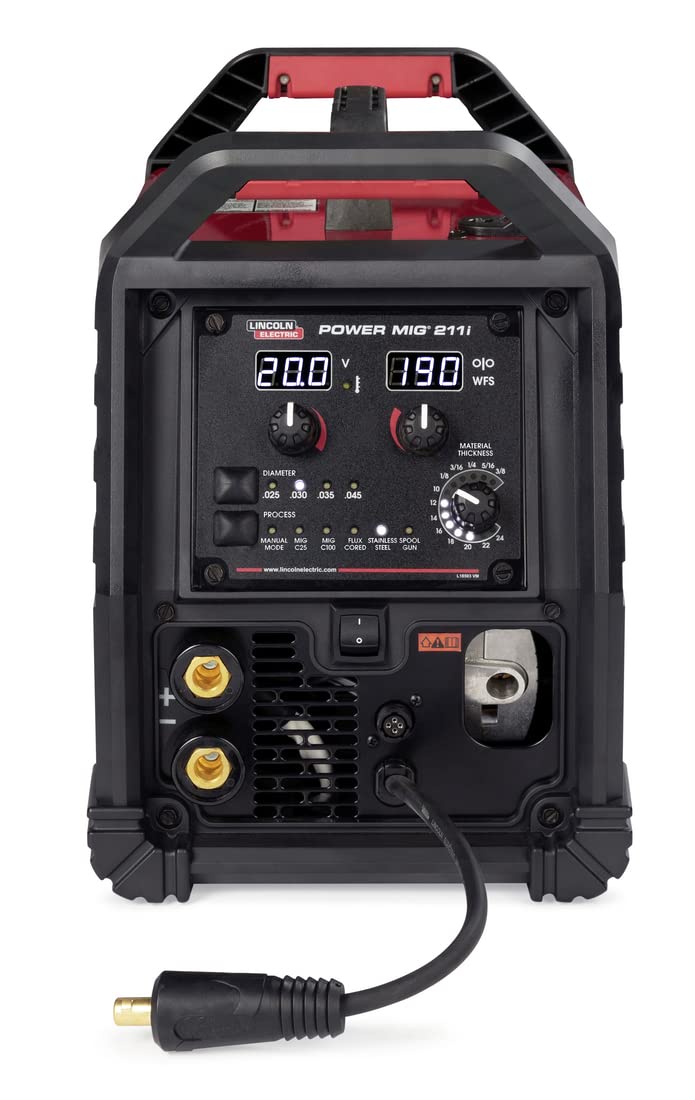
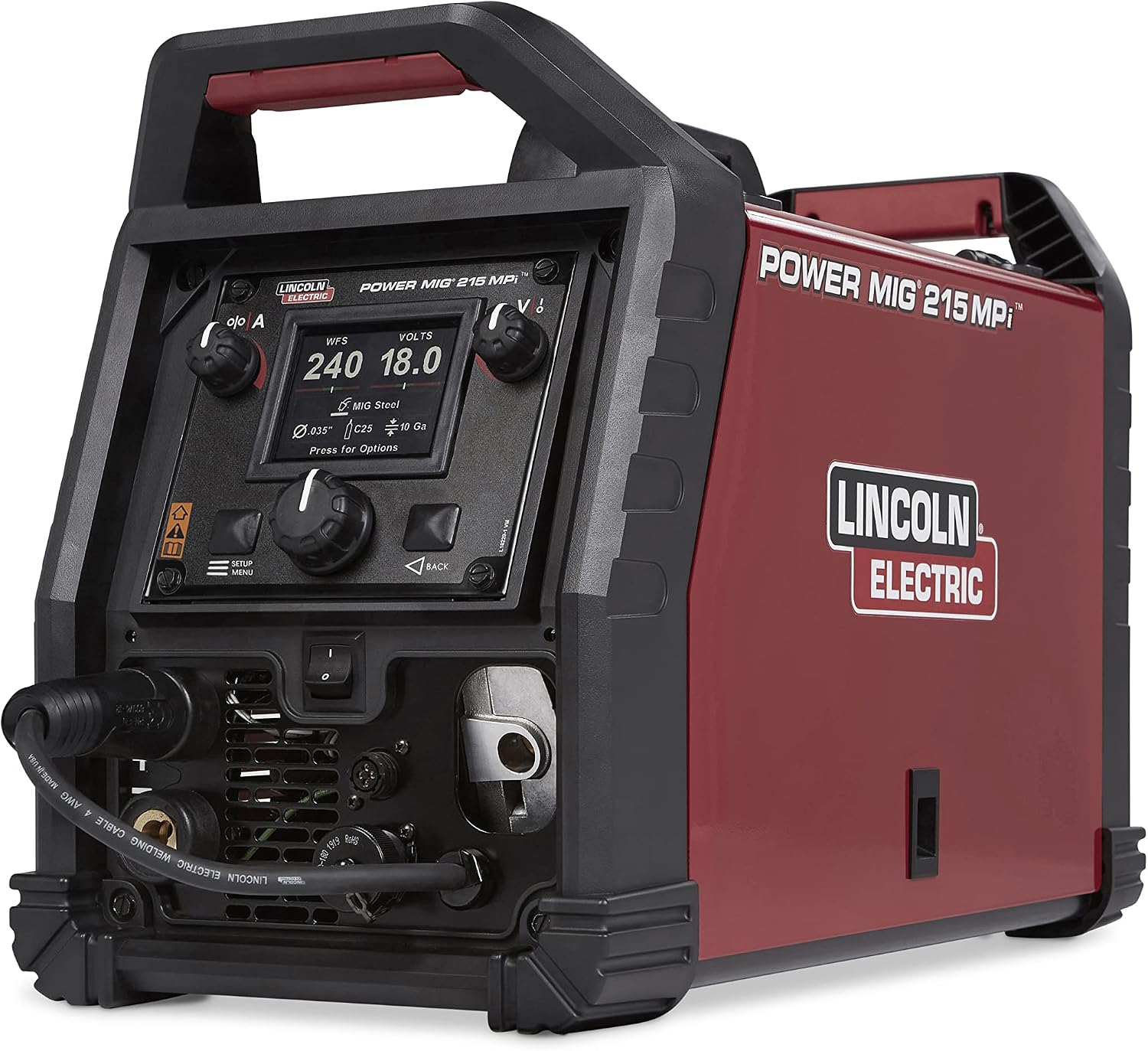
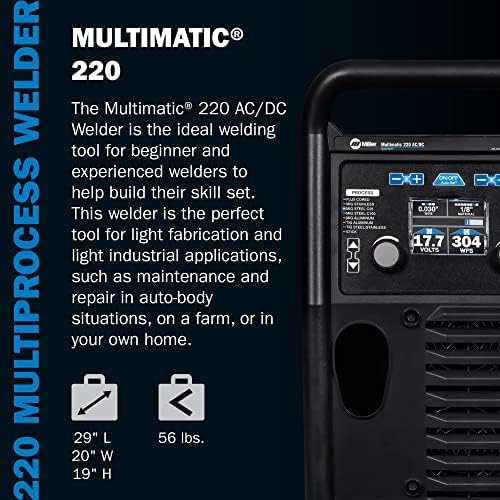
| EDITOR'S PICK[Miller 907757 Multimatic 220 AC](https://www.amazon.com/dp/B07K3CTMJ2?tag=greenflower20-20)… | Mid-tier[Lincoln Electric K4876-1 POWER](https://www.amazon.com/dp/B0B7TFS72M?tag=greenflower20-20)… | Budget pick[ESAB® Rogue EM 210 PRO MIG Weld](https://www.amazon.com/dp/B09KMH2CGQ?tag=greenflower20-20)… | |
|---|---|---|---|
| AC TIG | ✓ | ✗ | ✗ |
| MIG Gun | ✓ | — | — |
| TIG Torch | ✓ | — | — |
| Price | $4,488.00 | $2,249.99 | $1,249.00 |
| See on Amazon → | See on Amazon → | See on Amazon → |
The Machines on the Mat: What We’re Actually Comparing
At the intermediate-to-professional tier in 2026, the honest comparison pool shakes out to four machines that come up consistently in shop-floor decisions and distributor conversations:
- Miller Multimatic 220 AC/DC (~$2,100–$2,400 street price)
- Miller Multimatic 255 (~$3,000–$3,400 street price)
- Lincoln Power MIG 260 (~$2,200–$2,600 street price)
- Lincoln Power Wave 360 (~$3,200–$3,800 street price)
The Multimatic 220 and Power MIG 260 are the natural head-to-head pair — both are aimed at shops doing daily MIG production with TIG and stick as secondary processes. The Multimatic 255 and Power Wave 360 step up in output and waveform sophistication. We’ll anchor on the 220/260 comparison and pull in the upper tier where it matters.
A note on sourcing: Specifications referenced throughout this piece come from published product specification sheets available on millerwelds.com and lincolnelectric.com, supplemented by Grainger Industrial Supply’s multi-process welder category listings on grainger.com. No firsthand shop testing is claimed here — this is spec-sheet analysis and reported-use synthesis drawn from those named manufacturer and distributor sources.
Duty Cycle, Process Depth, and Arc Character: The Three Axes That Separate These Machines
Choosing between Miller and Lincoln at this price tier comes down to three technical variables. Each one maps to a real shop condition. Here they are, broken out across three machine tiers.
Entry-to-Mid Tier: Miller Multimatic 220 AC/DC vs. Lincoln Power MIG 260
Duty cycle is the percentage of a 10-minute window that a machine can arc continuously before needing to cool. A machine rated at 60% duty cycle at 200A can weld for 6 minutes, then needs 4 minutes of rest at that amperage. Exceed it and you’re triggering thermal shutdowns — which, on a production floor, means real downtime.
Per the Miller Electric Mfg. LLC Multimatic 220 AC/DC Product Specification Sheet published on millerwelds.com, the Multimatic 220 is rated at 40% duty cycle at 200A on 240V input. Per the Lincoln Electric Power MIG 260 Product Specification Sheet published on lincolnelectric.com, the Power MIG 260 is rated at 60% duty cycle at 200A on 240V input.
That 20-point gap at the same amperage is the single biggest differentiator between these two machines for daily production use. Shops running long, uninterrupted beads — structural fillet welds, trailer frames, repeated passes on thick plate — will feel the Power MIG 260’s advantage in sustained arc-on sequences. Operators in aggregated professional reviews consistently note the Multimatic 220 reaching thermal limits on heavy sustained MIG work, while the Power MIG 260 handles longer production sequences without complaint.
The Multimatic 220 earns its position differently: dual-voltage input (120V or 240V) and full AC TIG capability — the ability to weld aluminum using TIG, which requires alternating current to break through aluminum’s oxide layer. Per the Lincoln Electric Power MIG 260 Product Specification Sheet on lincolnelectric.com, the Power MIG 260 does not include AC TIG in its standard configuration. That’s a significant process capability gap if your shop does aluminum structural or cosmetic work.
| Spec | Miller Multimatic 220 AC/DC | Lincoln Power MIG 260 |
|---|---|---|
| MIG Duty Cycle | 40% at 200A | 60% at 200A |
| Input Voltage | 120V / 240V | 240V only |
| AC TIG (aluminum) | Yes | No |
| DC TIG | Yes | Yes |
| Stick (SMAW) | Yes | Yes |
| Approx. Street Price | $2,100–$2,400 | $2,200–$2,600 |
Plain-terms summary: Miller gives you more process flexibility and dual-voltage portability. Lincoln gives you more arc-on time per production hour at equivalent amperage. Which one matters more is determined by your actual job mix.
Lincoln
$2,249.99
In stock on Amazon
Check price on AmazonUpper Mid-Tier: Miller Multimatic 255
If your production volume is high enough that you’re regularly hitting the Multimatic 220’s duty cycle ceiling, the Miller Multimatic 255 addresses that constraint directly. Per the Miller Electric Mfg. LLC Multimatic 255 Product Specification Sheet published on millerwelds.com, the Multimatic 255 carries a duty cycle of 60% at 200A while retaining full AC/DC TIG capability — the combination the 220 cannot fully deliver simultaneously at the same production pace. It also steps up maximum MIG output to 300A, expanding the thickness envelope for heavier plate work.
The Multimatic 255 is the machine for shops that genuinely need both: sustained production MIG on steel and aluminum TIG as a revenue-generating secondary process. The price step to $3,000–$3,400 is real, and it’s justified only if both capabilities are in active rotation. If aluminum TIG is a “maybe someday” capability, the 255’s price premium is idle investment.
| Spec | Miller Multimatic 255 |
|---|---|
| MIG Duty Cycle | 60% at 200A |
| Max MIG Output | 300A |
| AC TIG (aluminum) | Yes |
| DC TIG | Yes |
| Stick (SMAW) | Yes |
| Approx. Street Price | $3,000–$3,400 |
Lincoln
$2,249.99
In stock on Amazon
Check price on AmazonPremium Tier: Lincoln Power Wave 360
At the $3,200–$3,800 price point, the Lincoln Power Wave 360 introduces a capability neither Multimatic touches at comparable price: advanced waveform control. Per the Lincoln Electric Power Wave 360 Product Specification Sheet published on lincolnelectric.com, the Power Wave 360 includes a proprietary waveform library with processes such as Surface Tension Transfer (STT) — a controlled short-circuit transfer mode that reduces spatter and heat input on thin material and root-pass pipe welding.
Waveform control, in plain terms, means the machine can precisely shape the electrical pulse during each arc cycle rather than delivering a fixed waveform. The practical result: better fusion on thin-gauge sheet metal, cleaner root passes on pipe without backing, and less post-weld cleanup on spatter-sensitive applications. These are not spec-sheet abstractions — they show up in labor cost and rework rate on the right job mix.
The Power Wave 360 earns its premium for shops where pipe root passes, thin-gauge stainless fabrication, or high-cosmetic-standard MIG work are regular revenue lines. For general structural fab and equipment repair on mild steel, the waveform sophistication is present but not fully utilized, and the Power MIG 260 at a lower price point delivers better return on the capital.
| Spec | Lincoln Power Wave 360 |
|---|---|
| MIG Duty Cycle | Per lincolnelectric.com spec sheet |
| Waveform Control | Yes — includes STT process |
| AC TIG (aluminum) | Yes |
| DC TIG | Yes |
| Stick (SMAW) | Yes |
| Approx. Street Price | $3,200–$3,800 |
Miller
$4,488.00
In stock on Amazon
Check price on AmazonTotal Cost of Ownership: Consumables, Warranty, and the Long Tail
The machine price is the easy number. The harder math is what it costs to keep the machine running over a three-to-five-year production horizon.
Consumables are a near-wash between these platforms. Per Grainger Industrial Supply’s multi-process welder category listings on grainger.com, standard MIG contact tips for both platforms run approximately $0.50–$1.00 each, with typical service life of 8–15 hours on mild steel at moderate amperages. Miller-branded replacement drive rolls for the Multimatic series and Lincoln-branded drive rolls for the Power MIG series both fall in a comparable price band per those same Grainger listings. Both platforms use industry-standard consumable formats with no proprietary lock-in. Shielding gas — C25 (75% argon/25% CO2), the standard MIG mix for mild steel — runs approximately $55–$85 per 80 cubic foot cylinder fill at 2026 industrial gas pricing through distributor accounts. Neither brand creates a consumable cost disadvantage.
Warranty and service is where meaningful differentiation exists. Per published warranty documentation on millerwelds.com, Miller’s warranty on the Multimatic 220 covers three years on the main power source. Per Lincoln Electric’s published warranty terms on lincolnelectric.com, the Power MIG 260 carries a three-year warranty on the power source with a separate one-year term covering the wire feeder. Both brands operate extensive authorized service networks across North America. Metro-area shops are well-served by both. Rural shops should verify authorized service center proximity before purchasing — a production machine’s downtime has a measurable daily cost, and a distant service center compounds it.
Financing math for context: With commercial equipment financing rates running in the 7.5–9.5% range for qualified small-business buyers in 2026, the roughly $400 street price differential between the Multimatic 220 and Power MIG 260 amounts to approximately $35–$45 in total interest difference over a 36-month term. It’s not a deciding factor. Buy the machine that fits the work.
The AWS Certification Angle
Per the American Welding Society’s AWS D1.1 Structural Welding Code for Steel, published on aws.org, certified weld procedures require documentation of the welding equipment used in the Procedure Qualification Record (PQR). Both Miller and Lincoln equipment is routinely used and accepted in D1.1-qualified procedures — neither brand creates a certification obstacle. The variables that determine D1.1 compliance are process control and operator qualification, not equipment brand. What matters is that your machine holds stable parameters at the amperage, voltage, and wire speed specified in your Welding Procedure Specification (WPS). Both machines reviewed here do that reliably per aggregated operator documentation across long-run professional reviews.
The Decision Rule: If X, Then Y
Here’s the clean version, written for the decision you actually have in front of you:
If your primary process is MIG on steel and stainless, with daily production runs of 30 or more minutes of arc time, and aluminum TIG is not a current or near-term revenue line: → Lincoln Power MIG 260. The 60% duty cycle at 200A is the right spec for sustained production. The AC TIG omission won’t cost you anything if the work isn’t there. Operators consistently report smooth, forgiving arc character on mild steel in short-circuit transfer.
Lincoln
$2,249.99
In stock on Amazon
Check price on AmazonIf your shop does a genuine mix of processes — MIG production plus aluminum TIG — or you’re actively selling aluminum fabrication capability to customers: → Miller Multimatic 220 AC/DC. The AC TIG capability is real and differentiating at this price point. Understand the duty cycle ceiling and schedule arc-on time accordingly, or budget up to the Multimatic 255 if sustained production volume is consistently high.
Lincoln
$2,249.99
In stock on Amazon
Check price on AmazonIf your volume has outgrown 220-class machines and you need sustained output with full process depth: → Miller Multimatic 255 for shops that need 60% duty cycle and aluminum TIG in the same chassis. Lincoln Power Wave 360 for shops where pipe root passes, thin-gauge stainless, or high-cosmetic MIG work are regular revenue lines and the waveform control will be actively used, not just owned.
Miller
$4,488.00
In stock on Amazon
Check price on AmazonIf you’re buying fleet-scale — three or more units for a production floor: → Call your Grainger or distributor rep before you finalize. Volume pricing, service contract bundling, and machine-specific training support differ by rep relationship and regional stocking, per Grainger Industrial Supply’s commercial account program documentation on grainger.com. Those conversations can shift the real cost comparison more than the street price differential between brands.
The Miller vs. Lincoln tribal debate runs deep in this industry — weld forums will give you strong opinions in both directions, often more loyal than analytical. The spec sheets are less dramatic: two well-engineered product lines, built for overlapping but not identical use cases, priced within shouting distance of each other. Match the spec to the work. That’s the whole game.